
New program addresses food animal veterinary shortage in rural America
April 13, 2026
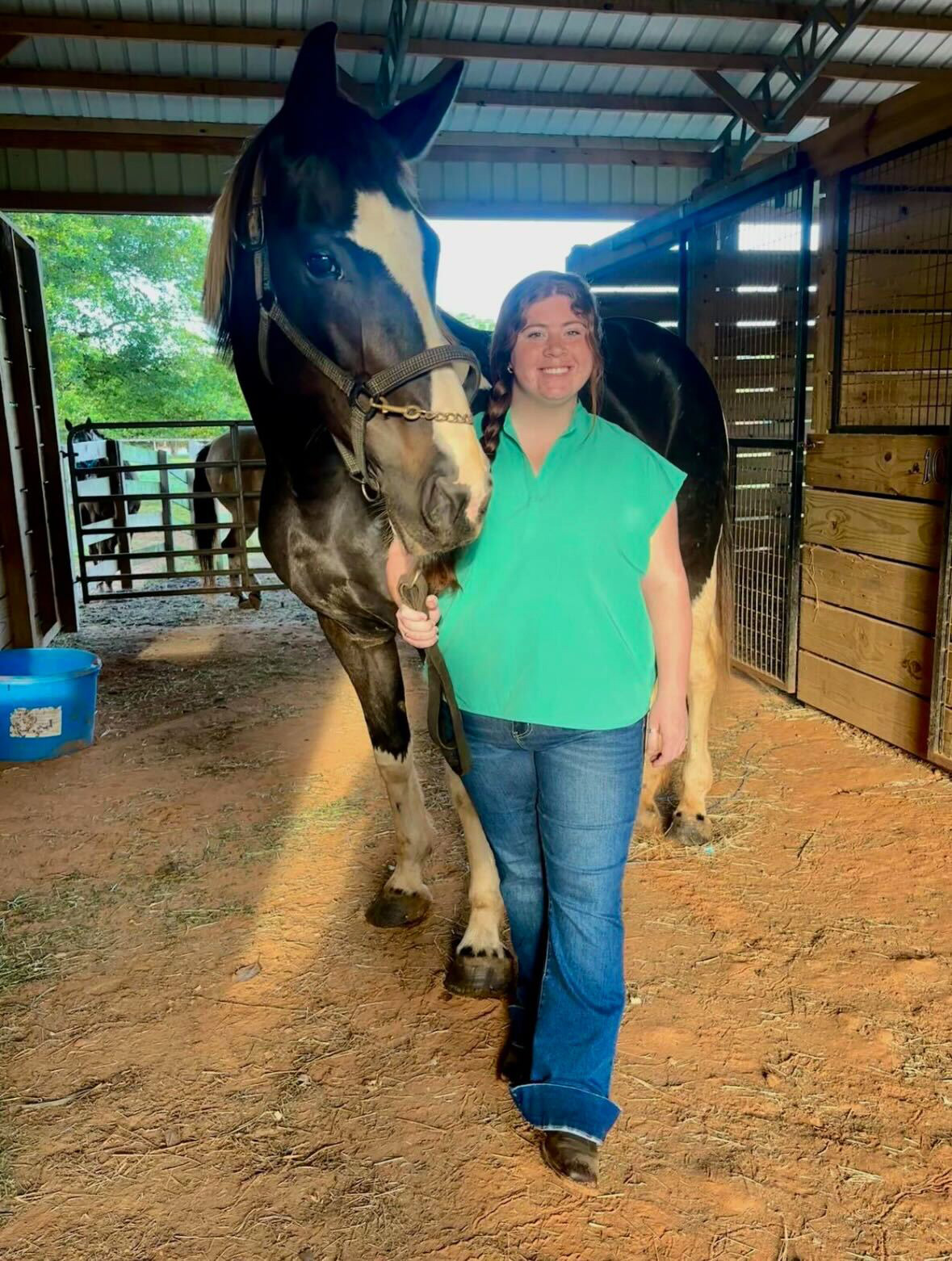
McCaelyn Beuschel, program participant, is completing a two-week clinical immersion experience in Covington, La., with Greene, Lewis & Associates, a mixed animal practice specializing in small animal and equine.
A new program at LSU Vet Med is giving first-year veterinary students from rural communities a structured, hands-on pathway back to the places that need them most. The initiative is supported by a $250,000 Education, Extension, and Training grant from the National Institute of Food and Agriculture Veterinary Services Grant Program, one of just eight awards nationwide aimed at addressing shortages of food animal veterinarians in underserved areas. The funding supports rural veterinary clinics as well as expanded education and training opportunities for veterinary students, veterinarians, and technicians.
A growing shortage of food animal veterinarians—especially in rural communities—threatens both animal health and the safety and security of the food supply. With support from the grant, LSU Vet Med is working to address that gap by connecting veterinary students during their first year of training with real-world practice in rural communities throughout Louisiana.
From April 6–19, eleven first-year students from the entering class of 2025 traveled to six rural Louisiana veterinary clinics and high schools, spanning eight different parishes. During the two-week experience students participated in the health of rural communities shadowing rural veterinarians and meeting with high school students to promote careers in rural veterinary practice. These experiences will continue for students entering in 2026 and 2027. Over a three-year period, the program will support rural experiences for up to 54 students.
Program leaders are also studying how these experiences influence career directions. Students complete a voluntary survey at the start of veterinary school, at the end of the first academic year, and at graduation, to assess their perceptions of rural practice. The survey measures factors such as social opportunities, professional isolation, and access to personal support systems.
“We have found that students from rural settings initially show interest in working in rural areas,” said Dr. Emily Erwin, associate professor of curricular analytics, who oversees the program. “But after completing vet school, their interest tends to fade. To better understand that shift, the program will track responses from students from both rural and non-rural backgrounds. Additionally, responses from those who participate in rural experiences like these and those who do not will be evaluated to help determine how willing students are to pursue rural practice.
The student field experience is led by Dr. Trey Neyland, a 2021 LSU Vet Med graduate and assistant professor of livestock practice at Arkansas State University College of Veterinary Medicine.
“Looking beyond this three-year program, we’re hoping to extend these experiences to our second, third, and fourth-year students,” Dr. Erwin said.